- Products
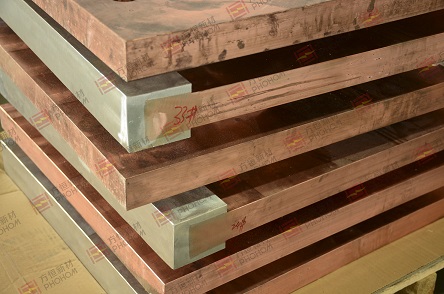
This is a U-shaped copper-aluminum transition plate used in the graphitization furnace of anode material production equipment.
In high-current graphitization furnaces, the connection between the conductive busbar and the copper-aluminum busbar was traditionally achieved through direct bolt crimping. However, this method has proven to be problematic, as the contact surfaces are prone to severe electrical corrosion over time, leading to increased resistance and reduced operational reliability.
To address this issue, the Cu-Al conductive joint has been specifically developed for graphitization furnace applications. This joint features a dual-end design, with one end connected to an aluminum busbar and the other to a copper electrode. It is available in two structural configurations: the up-down type and the U-type, allowing for flexible integration into different furnace layouts.
Compared to the traditional direct crimping of copper and aluminum, the contact resistance of this innovative joint is reduced to only one-quarter. This significant reduction not only enhances electrical stability but also ensures high mechanical strength. As a result, the Cu-Al conductive joint effectively eliminates the persistent problem of electrical corrosion, offering a more durable and efficient solution for high-current graphitization furnace operations.