
- news
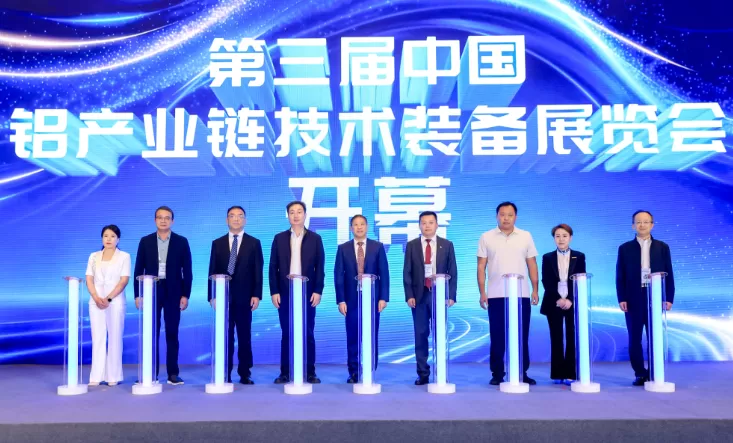
On October 14, the 3rd China Aluminum Industry Chain Technology and Equipment Exhibition officially opened. As an important supporting event of Aluminum Week, this exhibition focused on the development of the entire aluminum industry chain, covering multiple fields such as upstream resources, electrolytic smelting, aluminum material processing, auxiliary materials and supporting facilities, new materials, intelligent equipment, and green and low-carbon solutions. Zeng Zhiheng, Chairman of Hunan Phohom New Materials Technology Co., Ltd., was invited to attend the opening event and jointly witness the opening of the exhibition.
Multi-dimensional Technical Solution for the Conductive Link of Electrolytic Aluminum Cells
At the Aluminum Industry Chain Technology and Equipment Forum, Zeng Zhiheng delivered a keynote speech titled "Multi-dimensional Technical Solution for the Conductive Link of Electrolytic Aluminum Cells," sharing with industry peers Phohom New Materials' technological innovation achievements and industrialization practice experience in the field of energy saving and carbon reduction in the conductive circuit of electrolytic aluminum.
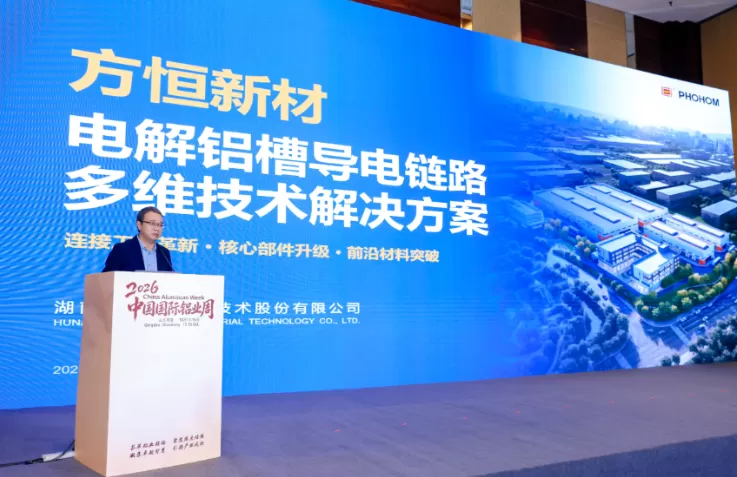
China's electrolytic aluminum production capacity ranks first in the world, and the industry is accelerating its transformation toward green and intelligent development. Reducing the voltage drop of the conductive circuit and improving current efficiency have become key paths to achieving the "dual carbon" goals and energy efficiency benchmarks. Phohom New Materials has launched a multi-dimensional technical solution for the conductive link of electrolytic aluminum cells, covering both anode and cathode scenarios and providing electrolytic aluminum enterprises with one-stop services ranging from material cladding, precision processing, and component manufacturing to system integration.
Anode Field | Full-process Optimization of the Conductive Link
Relying on the three underlying technology systems of "solid-state connection + layered cladding + nano modification," Phohom New Materials, through three core processes, innovates connection methods, applies new materials, systematically optimizes conductive performance, reduces energy consumption losses, and creates a full-process solution covering the conductive link.
Aluminum-aluminum direct welding process: For the connection process of the same aluminum material, fully solid-phase friction welding technology is adopted, with low heat input and concentrated heat, a narrow heat-affected zone, and a dense fine-grain weld seam. The interfacial bonding strength is higher than that of the aluminum matrix, and it also has excellent electrical conductivity, providing customers with an efficient and reliable same-material connection solution.
Steel-steel direct welding process: The steel claw beam and claw head adopt a full-interface forging direct welding process, eliminating internal defects caused by traditional casting, strengthening the structural strength and electrical conductivity of the steel claw body, ensuring long-term stable operation of the electrolytic cell, and improving equipment reliability.
Aluminum-steel/aluminum-titanium-steel cladding welding block: The welding block is prepared using aluminum-titanium-steel explosive cladding technology, greatly reducing the formation of intermetallic compounds (IMC), combining high electrical conductivity and bonding strength, adapting to the working conditions of different electrolytic cells, and improving operational flexibility.
At the same time, Phohom New Materials innovatively proposed a graphene aluminum-based new material guide rod solution, exploring the use of nano modification to reduce the resistance of the guide rod body and achieve lightweighting, tapping the energy efficiency and oxidation resistance potential of the conductive link.
In response to on-site working conditions such as large cathode current and thermal deformation, Phohom New Materials provides a series of energy-saving conductive products:
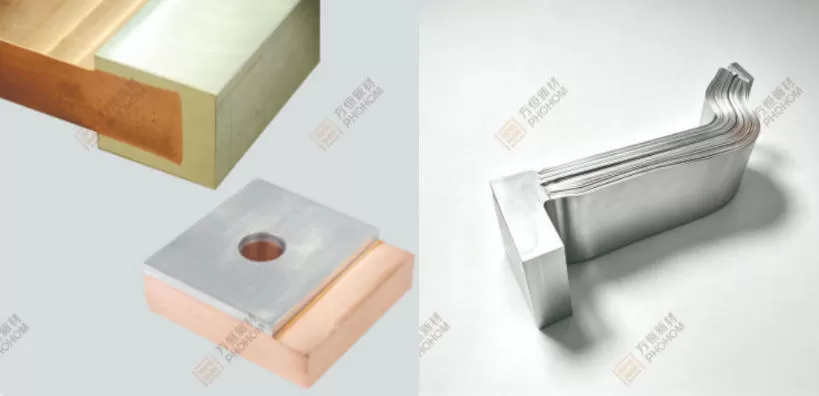
Copper-aluminum clad conductive bar: The interface metallurgical bonding is firm, optimizing current distribution, avoiding local overheating, and suitable for large-current busbars and compact installation scenarios;
Flexible connection cladding conductive bar: Aluminum foil flexible connections are combined with explosive cladding transition pieces to achieve atomic-level bonding of dissimilar metals, suitable for cathode flexible belts and busbar transitions, electrolytic cells with large thermal deformation, and renovation projects with large on-site installation space tolerances.
During this Aluminum Week, Phohom New Materials conducted in-depth exchanges with industry peers and upstream and downstream partners, and held discussions around energy-saving and consumption-reduction solutions for the conductive link of electrolytic aluminum. Facing the new demands of low-carbon industrial development, Phohom New Materials will continue to deepen its work in new materials and advanced connection technologies, helping electrolytic aluminum enterprises reduce energy consumption and increase benefits with hard-core products, and promoting China's aluminum industry to move from scale advantage to high-quality development.